 UFound
Define the four layers
The model is the reasoning brain, Claw turns plans into execution state and handoffs, agents own projects or sections, and skills perform specialist jobs. These layers make decision rights and responsibility visible.
Show decisions
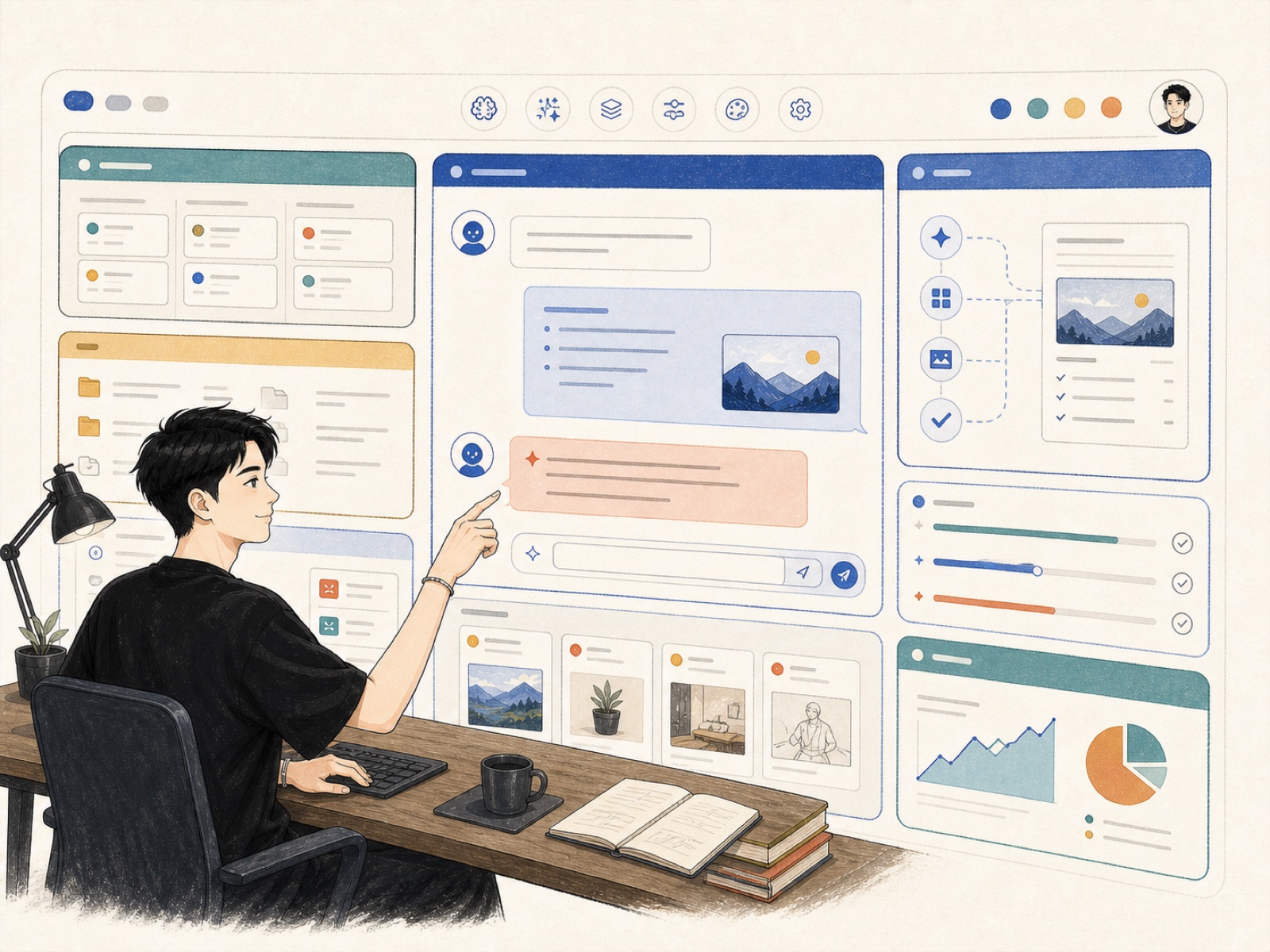
The home view should prioritize active projects, approvals, recoverable failures, recent conversations, and provider health. Opening a run should reveal its goal, owner, inputs, latest artifact, blocker, and next action within a minute.
Keep project context
Projects keep durable instructions, files, conversations, tasks, and decisions together. Recent chats belong to projects but do not represent completion. A left project rail, central work surface, and right run inspector keeps context navigable.
Run work through the chain
For publishing, the model chooses the path, Claw creates states, agents own research, content, visuals, and release, while skills do focused work. Production changes remain behind human approval.
Protect credentials
Store provider endpoints and encrypted secrets on the server. The browser only receives configuration status and a last-four hint. Keep workbench and admin access accounts separate from application content.
Recover from state
Classify authentication, permission, rate, network, and provider failures. Recover from checkpoints and real artifacts rather than the final chat message. Test by closing the browser, changing the responsible agent, and revoking one permission.